 Brown&Co

Agricultural Update July - September 2026
Tue 06 Oct 2026
Brown&Co’s market update provides an overview of commodity prices for 2026. It also provides an overview of points to consider going forward into autumn 2026, which include Environmental Schemes, Grants and UK Agricultural Policy updates.
The Brown&Co Agricultural Update Report reviews the previous financial quarter, highlighting the changes in market prices and trade patterns of commodities during the period.
This report analyses the cereals, oilseeds, milk, and meat prices, as well as input prices such as fuel, fertiliser, and feed.
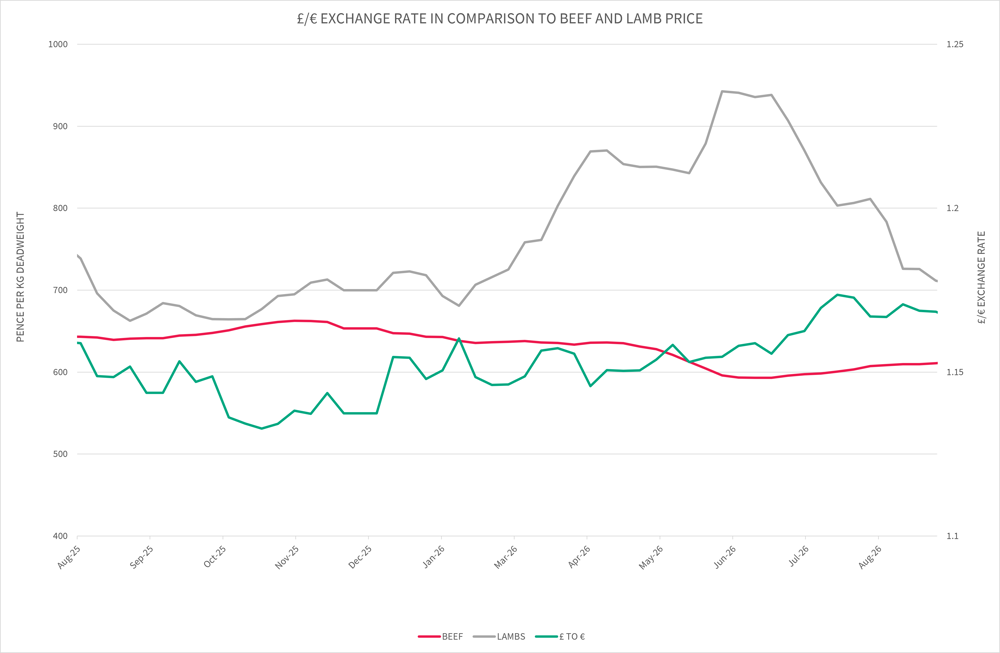
- Livestock markets were mixed during quarter three, with lamb prices falling significantly from 907p/kg at the end of quarter two to 725.5p/kg by late September, whilst beef prices recovered, with steers reaching 623.1p/kg by the end of the quarter.
- UK dairy prices improved during August, with the average farm-gate milk price rising to 36.89ppl, although this remained 17% below August 2025. Milk production also fell, whilst butterfat and protein levels increased.
- Pig meat demand was mixed, with overall volumes down 1.4% year-on-year. Mince and pig belly performed well, whilst steak, bacon and sausages recorded declines. Added-value products continued to grow, with volumes up 6.1%.
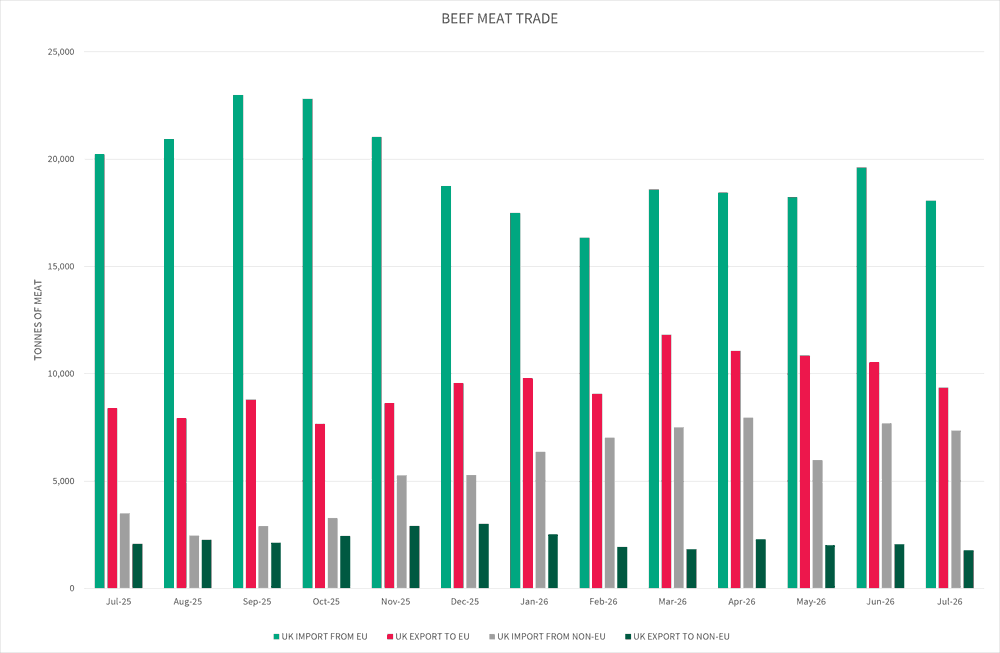
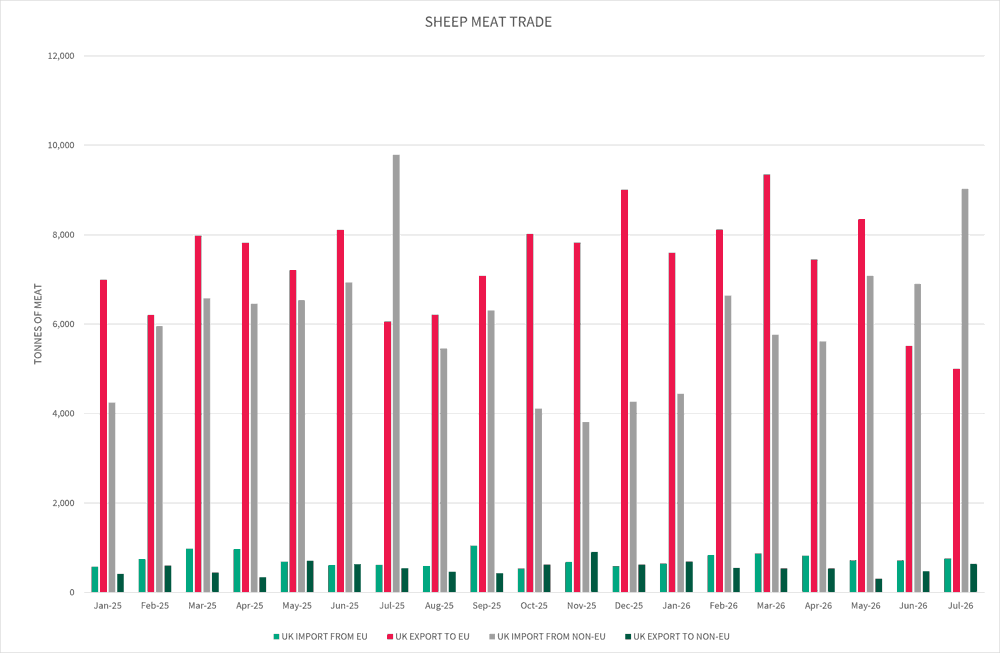
- The UK remained a significant net importer of red meat, with beef net imports reaching 41,028 tonnes during May–July, around 9% higher than the same period in 2025. Over the same period, sheep meat was also in net import, with imports exceeding exports by approximately 4,918 tonnes.
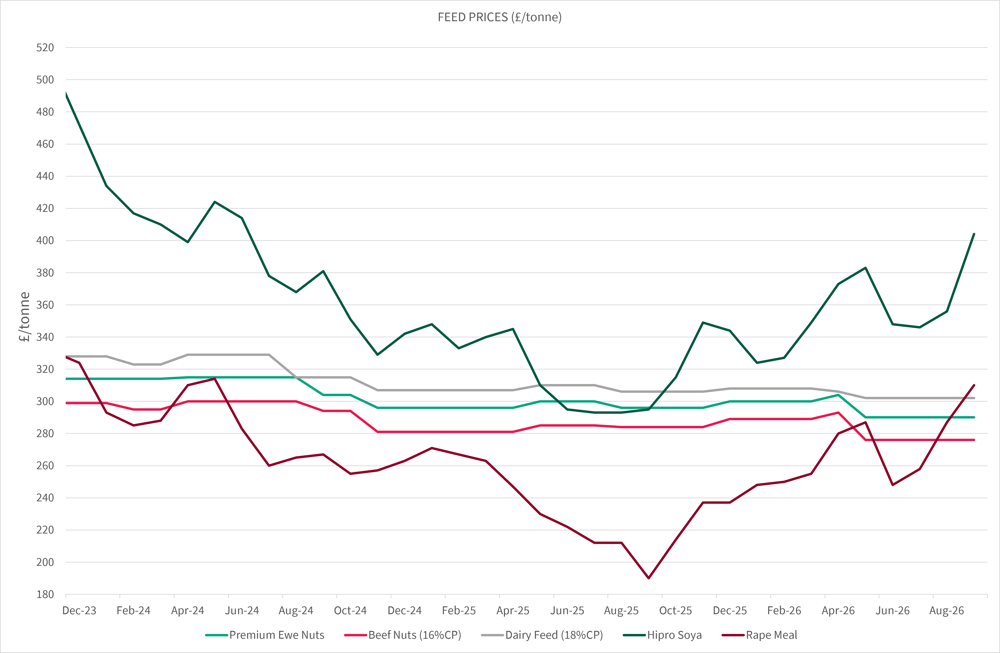
- Feed costs were relatively stable for compound feeds, but protein feed prices increased considerably. HiPro Soya rose to £404/t and Rape Meal to £310/t by September, around 37% and 63% higher respectively than September 2025.
- Crop markets strengthened overall during quarter three, despite considerable price movement. Feed wheat increased to £204.30/t, barley to £181.30/t and OSR to £453.50/t by the end of September. November wheat futures also increased through July and August before easing during September.
- Energy costs increased significantly during the quarter, with WTI oil and red diesel both well above their July levels by the end of September. Red diesel reached 118p/litre during the quarter, adding pressure to farm input costs.
- Fertiliser prices remained relatively high and mixed, with nitrogen and phosphate products generally above September 2025 levels. September prices included £475/t for 34.5% AN, £475/t for 0-24-24 and £630/t for TSP, whilst MOP was lower at £340/t.
SFI
The SFI (Sustainable Farming Incentive) 2026 application Window 2 opened on the 22nd of September 2026 as expected, however came to an abrupt close within 5 hours and 48 minutes having allocated £253 million.
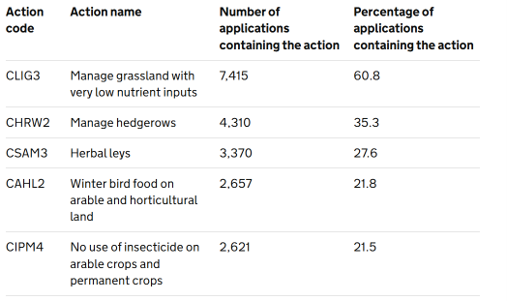
SFI 2026 Window 2 attracted around 12,200 applications, almost twice the number received in Window 1. Notably, around 72% of applications came from farm businesses with an existing agri-environment agreement due to expire by February 2027, indicating that SFI26 is being used significantly to replace or continue existing environmental agreements. The most popular actions were CLIG3 – Manage grassland with very low nutrient inputs, CHRW2 – Manage hedgerows, and CSAM3 – Herbal leys, which were also among the most popular actions in Window 1. Agreement values are lower than under previous SFI offers, with the average SFI26 Window 1 agreement worth around £28,000, compared with £56,000 under SFI23 and the expanded offer.
The table below provides further detail on the most popular actions in Window 2, with CLIG3 featuring in 60.8% of applications, followed by CHRW2 at 35.3% and CSAM3 at 27.6%.
With a further round of the SFI expected in 2027, farmers should consider their options and begin planning ahead to ensure they are well placed to apply when the details are confirmed.
Countryside Stewardship Higher Tier
Countryside Stewardship Higher Tier (CSHT) remains open for farmers and land managers who need to access funding for more complex environmental projects. The scheme provides support for activities that protect, restore and enhance the environment, while helping to address climate change. Since launching on an invitation-only basis in 2025, CSHT has been gradually expanded, with at least £50 million available for new agreements this year.
Farmers and land managers are able to submit an Expression of Interest (EOI) for woodland, agroforestry and new single-focus agreements. Defra also plans to trial applications on common land and increase payments for moorland and rough grazing actions, providing more opportunities for businesses to access funding for targeted environmental.
Capital Items 2027
The Capital Grants 2026 application window closed on 1st of September 2026, once the £225 million budget for this round had been allocated. Approximately 17,000 applications were received, with sheep netting (FG2), planting new hedges (BN11), and wooden field gates (FG12) proving to be the most popular options.
The Department has indicated that there will be a further round of applications next year, although no details on timings or the available budget have yet been confirmed. As the scheme is likely to operate on a ‘first come, first served’ basis, now is a good time to plan ahead and confirm potential projects early.
A number of infrastructure options require Catchment Sensitive Farming Officer (CSFO) approval, which must be obtained before submitting the application. CSFOs are generally able to visit farms during this period, but appointments will be limited. We therefore recommend submitting CSFO requests as soon as possible to help avoid delays when the next application window opens.
- Examples of options requiring CSFO approval include:
- Manure and slurry storage and roofing
- Livestock and machinery hardcore tracks
- Concrete yard renewal and associated items
- Water-related projects
Water Management Grant
The Water Management Grant is being re-opened, with up to £15 million available to support farmers in developing on-farm reservoirs for crop irrigation. The scheme is expected to open in autumn, helping farms improve resilience to drought and periods of extreme weather by storing water when it is available for use when it is most needed. If demand exceeds the available funding, the budget may be reviewed and additional funding considered.
The Government is also looking to reduce planning barriers for on-farm reservoirs, with updated planning guidance expected in September to provide greater clarity for farmers considering investment in water storage infrastructure.
Budgeting for Harvest 2027
With harvest 2027 planning already on the horizon, now is a good time to review your farm budgets and expected crop margins. Reviewing input costs, machinery, labour and other overheads early can help identify where costs can be managed and ensure cropping decisions are based on realistic margins.
Early budgeting also provides an opportunity to review input requirements, consider forward purchasing where appropriate, and assess the likely profitability of different cropping options before commitments are made. Taking the time to understand the numbers now can provide greater confidence when making decisions for the 2027 harvest and help ensure resources are focused on the most viable opportunities for the business.
Budgeting will also allow for cashflow forecasts to be prepared allowing farmers to identify peak cash requirements within the business. Identifying additional funding or overdraft needs early is beneficial allowing for early engagement with the bank and appropriate facilities to be put into place before the cash requirement is urgent.
Agricultural Update
Welsh Food Strategy
The Welsh Government is developing two key strategies that will have implications for agriculture and rural businesses. The National Food Strategy will take a whole-system approach from farm to fork, focusing on food security, health and wellbeing, the economy and rural development, and the environment. It aims to strengthen Welsh food production and supply chains, support innovation and value-added processing, improve routes to market, and address issues such as climate change, biodiversity and soil and water management.
Alongside this, the Welsh Government is developing its first Climate and Nature Action Plan, bringing climate change and nature recovery together within a single programme. The plan aims to support progress towards Net Zero by 2040 and significant nature recovery by 2050, while improving climate resilience and environmental sustainability. For agriculture, this is likely to include a focus on the impacts of flooding, extreme weather, water quality, biodiversity and the resilience of food production.
Canada and Trade
The UK’s accession to the Comprehensive and Progressive Agreement for Trans-Pacific Partnership (CPTPP) with Canada came into force on 1st September, meaning UK businesses now have access to all 11 CPTPP partner markets. For agri-food, the benefits are relatively limited, with improved access to Canadian quotas for dairy, poultry and eggs, alongside a dedicated beef and veal quota for UK exporters. However, UK exporters will compete with other CPTPP members for some of these quotas, while Canada has secured additional meat access and duty-free access for sweetcorn into the UK.
The existing UK-Canada Trade Continuity Agreement remains in place, allowing businesses to use whichever agreement is most beneficial, with CPTPP rules offering greater flexibility on the origin of goods. Wider UK-Canada trade negotiations remain stalled over issues including hormone-treated beef and Canada’s protected dairy sector. Meanwhile, Canada’s potential closer relationship with the EU is another development that could have implications for future UK-EU and UK-Canada agri-food trade.
Food and Drink Trade Deficit
The UK’s food and drink trade deficit reached £21.1 billion in the first half of 2026, the largest recorded since 2000. UK food and drink exports fell 3.4% to £12 billion, with export volumes down 11.7%, while imports increased by 0.9% to £33.1 billion. Exports to the US fell by more than 16%, while exports to the EU also declined slightly, with Ireland and France both seeing falls of around 5%.
There are some positive areas, with cheese, beef and whisky exports increasing, alongside growth in exports to India. However, the overall figures suggest ongoing structural challenges for the UK agri-food sector, with businesses facing costs and regulatory barriers in export markets while competing with imports domestically. The Food and Drink Federation is calling for changes to UK tariff policy to better support domestic food manufacturers and producers.
Seasonal Workers
The 2027 Seasonal Worker Scheme allocation has been confirmed, with 41,000 visas for horticulture and 1,900 for poultry. The early confirmation gives businesses greater certainty when planning their seasonal workforce for the year ahead, with seasonal workers remaining an important part of both sectors.
The NFU welcomed the allocation but continues to call for multi-year workforce planning to provide greater long-term certainty. It has also highlighted the need to keep the cost of the visa scheme under review, as this can affect uptake by seasonal businesses.
Scottish Compulsory Purchase
The Scottish Government is progressing reforms to modernise Scotland’s compulsory purchase system, following strong support for proposals consulted on in 2025. The current system is considered outdated and complex, with legislation dating back almost 200 years. New legislation is expected during this Parliamentary term, aiming to make the process simpler, faster and fairer, whilst supporting development, infrastructure and regeneration.
Proposed changes include streamlining CPO procedures, greater use of digital processes, clearer timescales, more flexible land acquisition powers and updated compensation arrangements. Further work is still needed on issues including statutory loss payments and how ‘hope value’ is considered when calculating compensation.
Welsh Slurry Rules
The Welsh Government is reviewing the closed periods for spreading slurry and manure under the Control of Agricultural Pollution regulations. Restrictions for grassland on sandy or shallow soils began on 1st September, prompting criticism from farming organisations that a fixed calendar approach does not always reflect changing weather conditions.
Rural Resilience Minister Llyr Gruffydd MS is due to meet farming representatives to discuss a more flexible approach, although any changes are unlikely to take effect until next year. Meanwhile, an independent review of agricultural red tape, led by former NFU Cymru president John Davies, is gathering evidence from farmers on how regulation could be simplified.
Budget 2026
The 2026 Budget is due to take place on Wednesday 28th October 2026. The Budget will set out the Government’s economic priorities and provide an indication of the direction of economic policy under Prime Minister Andy Burnham.

UK Weather
July
July 2026 was an exceptional month for UK weather, ranking as the third driest July on record and the sunniest July ever recorded. England and Wales experienced their driest July on record, with many areas receiving 20% or less of their average rainfall, alongside consistently above-average temperatures and record levels of sunshine. Southern England saw particularly extreme conditions, with just 1.9mm of rainfall, only 3% of the average, alongside record sunshine and a mean temperature of 20.1°C.
The month highlights the increasingly variable nature of UK weather, with significant regional differences in rainfall and continued periods of warmth. With much of the summer still to come, the Met Office will continue to monitor how these conditions develop and what they may mean for rainfall, temperatures and agricultural conditions later in the year.
August
August 2026 was notably warm across England, particularly in the south. Greater London recorded an average maximum temperature of 26.8°C, 3.9°C above average, while several counties including Surrey, West Sussex, Berkshire and Oxfordshire also recorded temperatures more than 4°C above normal.
Rainfall was generally low across southern and eastern England, with Greater London receiving just 17.1mm, around 30% of its average August rainfall. Surrey received 38% of average rainfall, while Essex and Hertfordshire recorded 43% and 44% respectively. However, rainfall was more variable further north, with parts of Yorkshire and the Midlands receiving above-average totals. Overall, the month was characterised by warm temperatures and significant regional variation in rainfall.
September
September has continued the trend of unusually warm weather, with much of England experiencing temperatures above the seasonal average and plenty of sunshine. A marked north-west to south-east rainfall contrast has also developed, with central, southern and eastern areas remaining predominantly dry. This has been particularly significant for drought-affected areas, where rainfall totals remain well below average.
As September draws to a close, a spell of warmer weather is expected, with temperatures potentially reaching 20–26°C across England on Tuesday. Wetter and windier conditions will then move in, although the heaviest and most persistent rain is expected further west, meaning some of the driest areas of central, southern and eastern England may receive relatively little rainfall. Conditions are expected to become calmer and drier again later in the week.
Harvest 2026
As at 25th September, harvest 2026 is largely complete across the UK, with wheat, winter barley and winter oilseed rape now fully harvested, while spring barley was 99% complete. Harvest progressed rapidly across much of England and Wales due to drought and prolonged high temperatures but slowed as it moved northwards and into Scotland due to wetter conditions. Overall yields have been disappointing and highly variable, reflecting limited rainfall since spring. Winter wheat averaged 6.9t/ha, around 11% below the UK five-year average, while spring barley averaged 4.8t/ha, 17% below its five-year average. Oats also remained below average at 4.6t/ha, although yields improved as harvesting progressed into northern areas.
There was considerable variation between farms, with soil type, drilling date, use of organic fertilisers, previous cropping, variety choice and local weather all contributing to differences in performance. Some growers achieved yields close to or above their long-term averages, while others experienced significant reductions. Winter barley was more in line with longer-term performance, averaging 6.9t/ha, while winter oilseed rape was a notable exception, averaging 4.0t/ha, around 19% above the UK five-year average. Crop quality was also variable, which may present additional challenges for storage and marketing. Overall, the 2026 harvest highlights the impact of limited rainfall during the growing season, but also the significant influence that local conditions and individual farm management had on final yields.
Climate and Carbon
Biodiversity Net Gain (BNG) rules in England were amended during the quarter, with changes coming into force on 6th August 2026. Developments of 0.2 hectares or less are now generally exempt from mandatory BNG, while a new exemption applies to temporary developments where land is to be reinstated within five years. The biodiversity gain hierarchy has also been amended for minor developments, allowing those still subject to BNG to pursue off-site gains in the first instance, while the previous self and custom-build exemption has been removed. These changes generally apply to new planning applications submitted from 6th August, with existing applications and permissions continuing under the previous rules.
Further BNG reforms are expected, including exemptions for developments focused on biodiversity and certain improvements to parks, playing fields and public gardens, alongside changes to the statutory biodiversity metric. A consultation on a possible additional exemption for certain residential brownfield developments has also taken place, with the Government yet to publish its response.
With a new Government now in place, the timing and detail of the remaining reforms may be subject to further decisions, although no changes have been announced to the amendments that came into force in August. BNG is also due to become mandatory for new nationally significant infrastructure projects from 2nd November 2026.
Supply Chain
Trade and Geopolitics
Ukraine’s grain export capacity through the Black Sea has fallen significantly as the conflict with Russia continues, despite efforts by Turkey to support safe shipping routes. Barley exports are significantly lower than the same period last year. Reduced availability from Ukraine is contributing to continued upward pressure on UK farmgate prices for feed wheat, barley and oilseed rape.
Inputs Continue to Rise
Global geopolitical instability, including disruption to Black Sea grain exports and conflict in the Middle East, is putting upward pressure on farm input costs. UK red diesel prices have risen above 105p/litre, while nitrogen fertiliser prices have also increased, with granular urea and ammonium nitrate exceeding £450–£470/t. These rising costs are adding further pressure to farm budgets and could feed through into the wider food supply chain.
Farmers are being encouraged to plan ahead for spring fertiliser requirements, as potential supply-chain pressures, limited storage capacity and the introduction of CBAM could lead to tighter availability and delays into early 2027.
Defra Food Supply Chain Concerns
The National Audit Office (NAO) has warned that the Government needs to work more closely with businesses, communities and households to strengthen the resilience of the UK food supply chain. While the sector has generally managed recent disruptions, including COVID-19 and the war in Ukraine, the risk of more severe shocks from extreme weather, disease outbreaks and cyber-attacks is increasing.
The NAO found that Defra has improved its emergency planning but needs to do more to involve industry and local authorities in testing its response plans and preparing for major disruptions. It has recommended stronger engagement with the food industry, clearer emergency planning and a review of the Government’s powers to respond to severe food supply disruptions.
Consumer Behaviour
Consumer confidence showed a modest improvement over the summer, with 56% of people describing themselves as financially secure, up one percentage point from the previous quarter. Although 55% still believe the UK economy is worsening, this has fallen from 60% in the previous quarter, suggesting a gradual improvement in economic sentiment.
Despite continued concerns over the cost of living, consumers continued to spend over the summer, with 53% eating out at restaurants, 45% buying new clothing and 40% ordering takeaways. However, caution remains, particularly around larger purchases, with 39% making no big-ticket purchases during the period. Overall, consumer confidence appears to be improving slightly, but households remain cautious about the wider economy and discretionary spending.
Livestock Markets
Pork
Pig meat purchases declined slightly over the 12-week period, with volumes down 1.4% year-on-year and total spend down 0.6%, while average prices paid increased by 0.8%. Within primary pig meat, volumes were broadly stable, falling by just 0.2%. Steak recorded the largest decline, with volumes down 6.5% (442 tonnes), largely due to fewer buyers. In contrast, mince continued to perform strongly, with volumes increasing by 24.8%, supported by a 4.2% reduction in average prices paid. Pig belly also saw growth, with volumes up 13%.
Processed pig meat experienced a 3.1% decline in volumes over the period. Bacon rashers recorded the largest reduction, falling by 5.9% (1,629 tonnes), with the decline attributed to fewer shoppers and reduced purchase frequency. Sausage volumes also fell by 3.6%, despite the potential for increased summer demand. This was partly offset by continued growth in added-value products, where volumes increased by 6.1%. Sous vide products saw particularly strong growth, up 17.2%, driven by both an increase in the number of buyers and higher volumes purchased per trip. Marinades also performed positively, with volumes increasing by 3.7%, supported by increased purchases per trip.
Dairy
The average UK farm-gate milk price increased to 36.89ppl in August 2026, up 4.0% (1.4ppl) from July. However, prices remained 17% below August 2025, indicating that although prices increased during the month, they remained significantly lower than a year earlier. Milk production also decreased during August, with total volumes falling to 1,212 million litres, down 4.9% from July and 3.7% compared with August 2025.
Milk quality measures were higher during the month, with average butterfat content increasing to 4.27% and protein content to 3.44%. Butterfat was 2.4% higher than July and 1.4% higher than August 2025, while protein increased 1.9% from July and was 0.9% higher year-on-year. Overall, August saw a rise in the average milk price and milk constituents, alongside lower milk production volumes, although the average farm-gate price remained below the level recorded in August 2025.
Beef
Quarter three has shown the beef prices to be rising after the low of last quarter at 595.60p/kg/Dw. Prices for all steers have finished the quarter at 623.1p/kg/Dw, an increase of 27.5p/kg/Dw compared to the last quarter.
Lamb
Lamb prices have come under pressure through the quarter, falling from 907p/kg/Dw at the end of the previous quarter to 725.5p/kg/Dw by 25th of September. Prices declined steadily through July and August, reaching a low of 707.1p/kg/Dw in early September, before showing some recovery in the final weeks of the quarter. Overall, prices remain around 20% below the previous quarter-end level.
Feed
Feed prices during the July–September 2026 quarter were relatively stable for the main compound feeds, with Premium Ewe Nuts holding at 290/t, Beef Nuts at 276/t and Dairy Feed at 302/t throughout the quarter. This compares with 296/t, 284/t and 306/t respectively during the same period in 2025, representing modest year-on-year reductions.
In contrast, protein feeds saw a marked increase, with HiPro Soya rising from 346/t in July to 404/t in September, while Rape Meal increased from 258/t to 310/t over the same period. Compared with September 2025, HiPro Soya was around 37% higher and Rape Meal around 63% higher, reflecting significantly higher protein feed costs towards the end of the quarter.
Beef Meat Trade
The UK remained a net importer of beef during May–July 2026, with net imports totalling 41,028 tonnes, compared with 37,797 tonnes over the same period in 2025. Imports from the EU remained relatively consistent, at around 18,200–18,800 tonnes per month, while exports to the EU were broadly similar to the previous year. Non-EU imports also remained significant, particularly in May and June, while exports to non-EU markets were comparatively limited. Overall, the figures indicate that the UK continued to rely heavily on imported beef, with net imports around 9% higher than during May–July 2025.
Sheep Meat Trade
The UK was a net importer of sheep meat over the May–July 2026 period, with net imports of approximately 4,918 tonnes. While May remained a net export month, the position moved into net imports during June and increased further in July, when net imports reached 4,145 tonnes.
Compared with the same period in 2025, when the UK recorded net imports of approximately 1,913 tonnes.
Wheat Barley and OSR Price trends
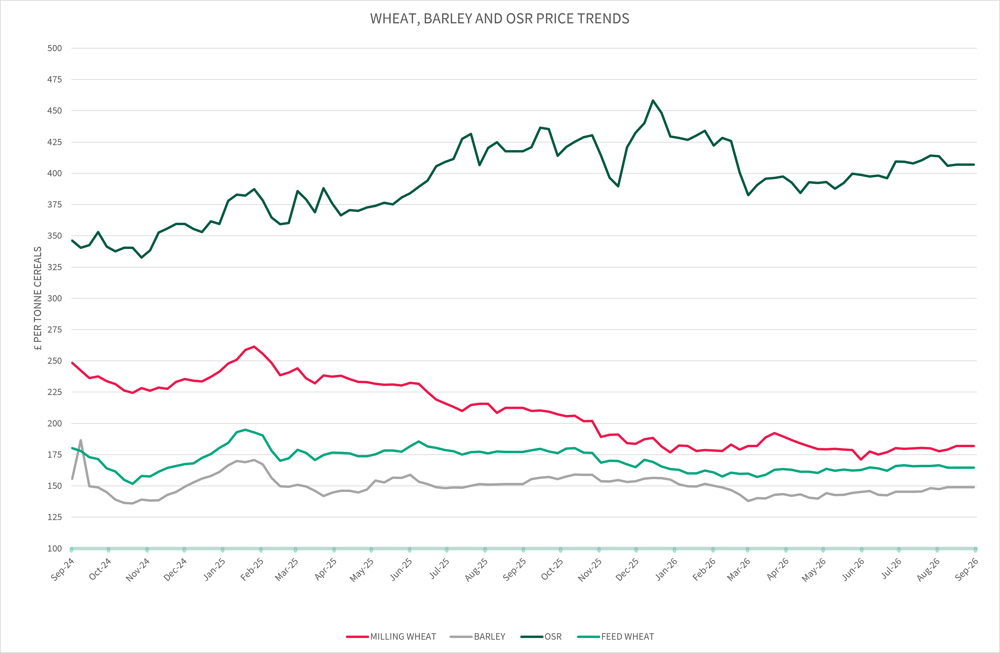
Crop prices were generally stronger over the July to September quarter, although the market was relatively volatile throughout the period. Feed wheat and milling wheat both experienced fluctuations during July and August before strengthening into September, with feed wheat rising from £172.10/t at the start of July to £204.30/t by the end of September. Barley also strengthened significantly, despite some movement during the quarter, increasing from £145.40/t to £181.30/t.
OSR followed a more variable pattern, initially falling to £415/t before recovering to £453.50/t by the end of September. Overall, the quarter saw a strengthening cereal market, but with prices responding to changing global market conditions rather than following a consistent upward trend.
Futures Market
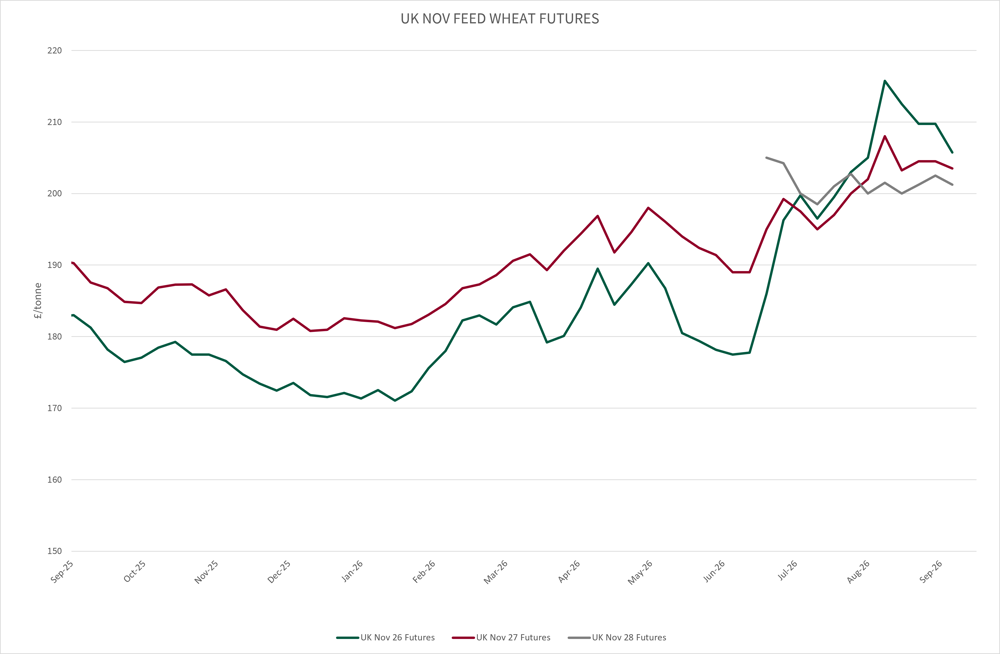
November 2026 wheat futures increased from £186.00/t on 10th July to a high of £215.75/t on 28th August, before falling to £205.75/t by 25th September. November 2027 futures increased from £195.00/t in July to £208.00/t on 28th August, before reducing to £203.50/t by the end of September. November 2028 futures increased from £205.00/t in July to £214.00/t on 28th August, before falling to £201.25/t by 25th September. Overall, all three November contracts increased during July and August before reducing during September.
Inputs
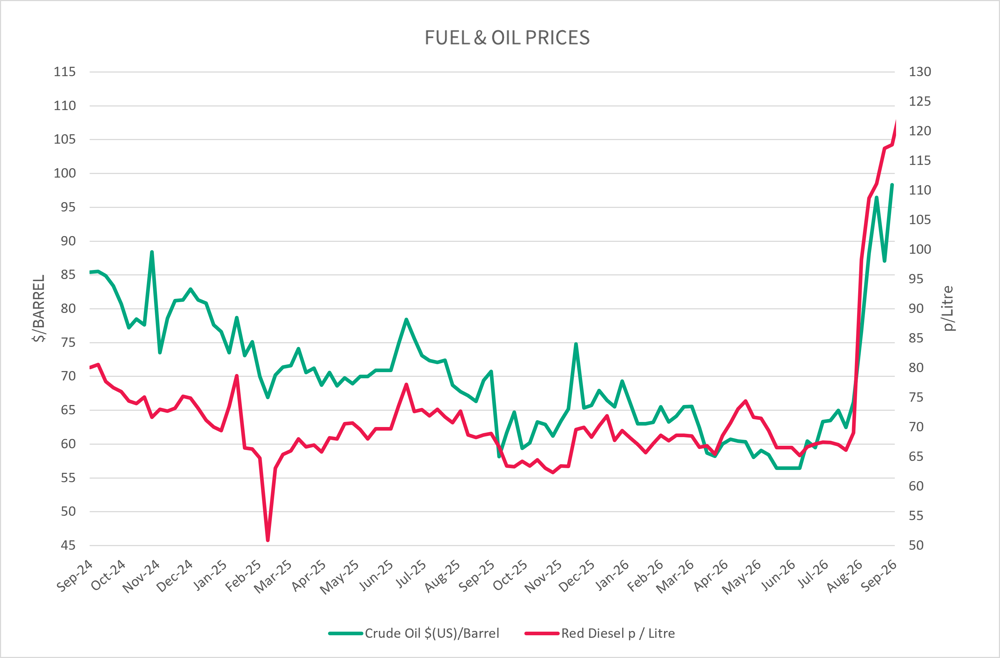
During July to September 2026, the euro exchange rate remained relatively stable, ranging from €1.1625 to €1.1736 to the pound. Oil and red diesel prices fluctuated more significantly during the quarter. West Texas Intermediate increased from $68.74/barrel at the start of July to $87.36/barrel in late July, before moving between $76.16 and $104.40/barrel during August and September.
Red diesel followed a similar pattern, increasing from 80.13p/litre at the start of July to 98.95p/litre in late July, before reaching 118.00p/litre on 18th September. By the end of September, oil stood at $89.89/barrel and red diesel at 117.70p/litre, both well above their levels at the start of the quarter.
Fertiliser
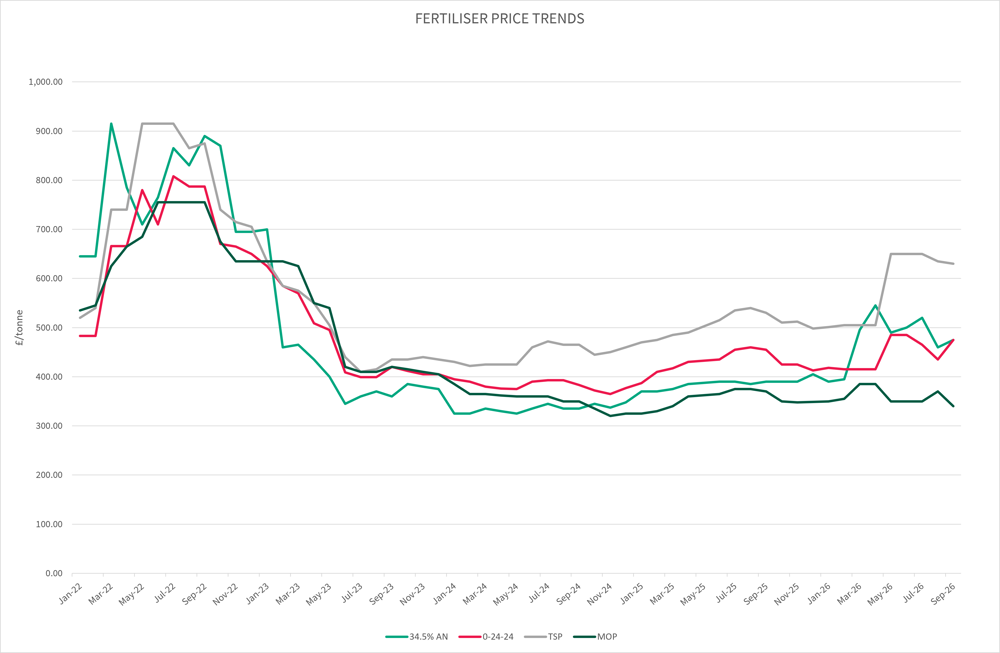
Fertiliser prices were mixed during quarter three for 2026, with prices fluctuating between July and September. 34.5% Ammonium Nitrate (AN) increased from £520/t in July to £460/t in August before rising to £475/t in September. 0-24-24 followed a similar pattern, falling from £465/t in July to £435/t in August before increasing to £475/t in September. TSP remained relatively high at £650/t in July, falling slightly to £635/t in August and £630/t in September. MOP increased from £350/t in July to £370/t in August before falling to £340/t in September.
Compared with the same period in 2025, fertiliser prices were generally higher. In September, 34.5% AN was £475/t compared with £390/t in September 2025, while 0-24-24 was £475/t compared with £455/t. TSP was also higher at £630/t compared with £530/t, whereas MOP was lower at £340/t compared with £370/t. Overall, quarter three 2026 showed considerable movement in fertiliser prices, with nitrogen and phosphate products remaining above their levels at the same point in 2025.

Keep updated
Keep up-to-date with our latest news and updates. Sign up below and we'll add you to our mailing list.