 Brown&Co

Harvest 2026 Survey Results
Thu 27 Aug 2026
Oilseed rape (OSR) has emerged as the single exception in a harvest where growers have mostly achieved below average yields for other crops.
The 2026 harvest is all but complete and farmer responses to a Brown&Co survey have confirmed what most already suspected – the year has been another testing one for combinable crops and financial pressure continues to build.
The absence of rainfall has been the primary driver with very little falling in parts of the UK from spring onwards. Periods of intense heat, at times exceeding 30°C, added further stress to thirsty crops.
Growers on lighter land were generally hit the hardest - AHDB analysis shows that factors such as soil type, moisture-retention capacity, and drilling date proved crucial in determining performance.
Responses to Brown&Co's 2026 Harvest Survey gives a snapshot of some of the below average yields:
- Winter wheat: Just 4% of respondents beat their five-year average yield while 81% fell below it, 48% by more than 20%
- Spring barley: 45% of respondents were 20% or more down on their five-year average
- Winter barley: The performance for winter barley growers was steadier although yields were below average for 36%; 44% of respondents don't grow this crop
- OSR: This was the standout crop of the year - 36% of growers matched or beat their five-year average with only around 10% falling short
How the less-cropped areas compare nationally
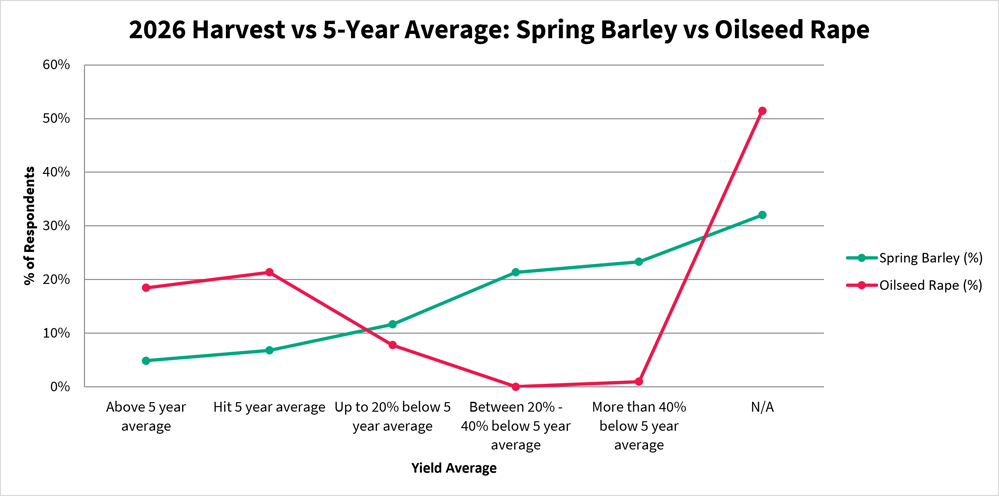
OSR and spring barley were the crops that recorded the highest ‘not applicable’ as 52% don’t grow OSR and 32% are not spring barley producers, reflecting how many respondents have reduced or dropped these from their rotations.
This matches the national trend as AHDB's Early Bird and Planting & Variety Surveys for harvest 2026 put the UK OSR production area at 316,000ha, up 30% on the 2025 42-year low, while the total barley area fell 10% to its smallest since 2011, driven largely by a 15% drop in spring barley plantings.
Where growers persisted with OSR, it paid off: AHDB reported yields 18% above the five-year average in line with the experience of Brown&Co respondents.
The national picture for spring barley is in step with the Brown&Co results too - yields are about 26% below average, reflecting the widespread underperformance recorded by our survey.
Price and geopolitics: why OSR is back in favour for 2027
Sixty percent of respondents intend to grow winter OSR in the next growing season, dictated largely by price. The ongoing Russia-Ukraine conflict is restricting sunflower oil supply while rising crude oil prices are feeding through to the vegetable oil and biodiesel markets. Record low water levels on the Rhine, which is restricting rapeseed and biodiesel feedstock movement into Germany and the Netherlands, adds further pressure.
As well as a strong price, better agronomy is adding support to growing OSR: farmers report improved control of cabbage stem flea beetle and more reliable establishment.
The outlook for OSR margins is more favourable than for wheat and barley, both of which have been held back by weak prices and lower premiums and have drawn more growers towards drilling OSR.
Marketing and support scheme uptake
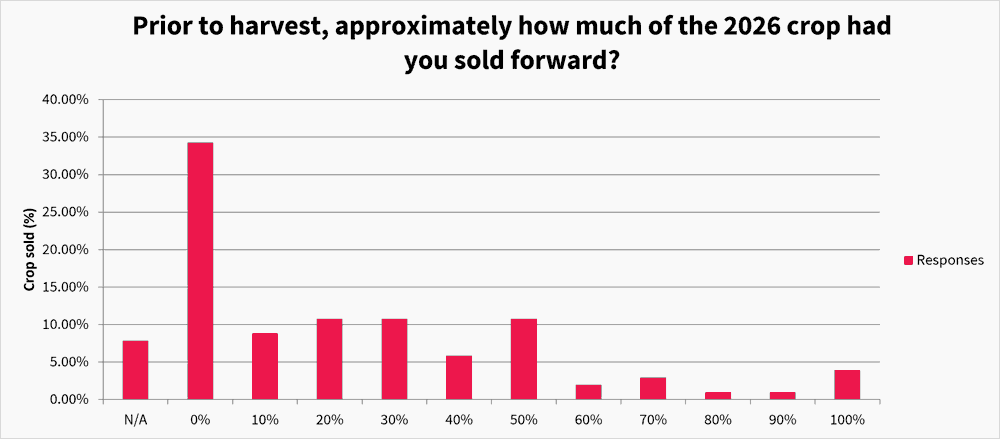
Faced with lower yields, 42% of respondents forward sold none of their 2026 crop before harvest, and a third sold less of their 2026 crop than they had by that point last year; a third sold the same amount.
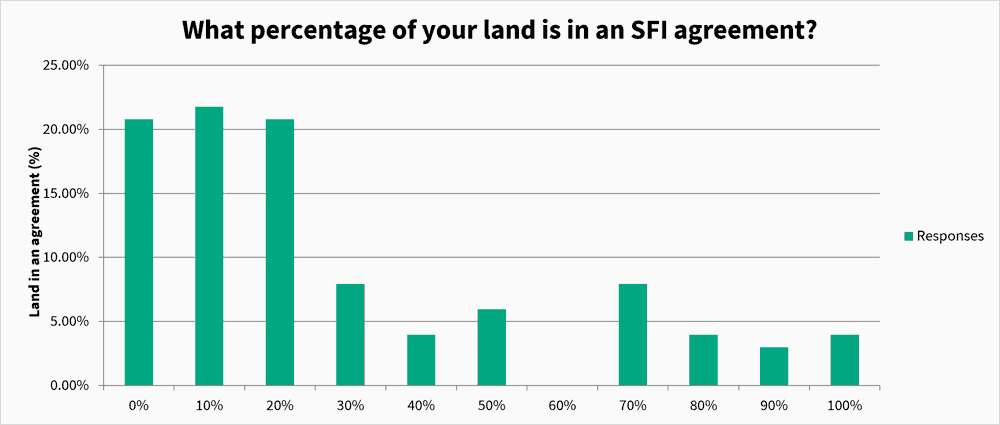
Environmental schemes remain central to farm income with 81% of respondents in an Sustainable Farming Incentive (SFI) agreement, most commonly covering 10-20% of their land, and 49% plan to increase their SFI area for 2027.
Financial pressure is building
Fifty seven percent of respondents expressed concerns over the financial outlook for their businesses over the next 12 months, and the wider figures explain why. Defra's latest forecasts put average Farm Business Income on cereal farms for 2025/26 down 66% to just £17,000, and general cropping income halved, to £54,000, driven by lower cereal prices, variable yields and continuing cost pressure.
Costs are moving in the wrong direction too. ‘Agflation’ is running at 8.6% year-on-year, the highest since shortly after the 2022 invasion of Russia into Ukraine, and agricultural output prices are down 2.1% over the same period.
Ammonium nitrate prices stood at £520/t in July, up from £390/t a year earlier, and the cost of tractor diesel is nearly 40% more than it was at this time last year, as covered in the recent Brown&Co update on diesel prices.
Take action now
With margins so tight, now is the time to take a closer look at the numbers, not wait for the year-end accounts. Brown&Co's agricultural business consultancy (ABC) team can help with budgeting and cashflow forecasting, benchmarking results against comparable farms, reviewing contract farming agreements and machinery costings, and assessing whether increasing the SFI area makes sense for your business.
To talk through your 2026 results and plan for 2027, please contact your local Brown&Co office.
Keep updated
Keep up-to-date with our latest news and updates. Sign up below and we'll add you to our mailing list.